Deadlines are shrinking. User expectations are climbing. And the competition? They are already working on their next big release. In the fast-moving world of Android app development, one wrong choice in your tech stack can cost months — and more importantly, opportunities. Businesses don’t just need an app; they need one that is fast to build, easy to maintain, and ready for the next wave of innovation.
This is a common occurrence, when brands approach us with unfinished projects, soaring budgets, and frameworks that are unable to satisfy market demands. The frustration is genuine, but so is the solution. And in 2025, that solution often starts with knowing which frameworks will keep you ahead of the curve.
So, which ones are worth your time, money, and trust this year? Let’s break it down.
The Android App Landscape in 2025
If you are in Android app development, you know the market is a beast — growing fast and showing no signs of slowing down. Billions of Android devices are in the hands of users worldwide, from budget smartphones to high-end foldables. That means more opportunities but also more complexity. Apps today must work seamlessly across various screen sizes, performance levels, and network conditions.
This is where picking the proper framework becomes a business decision, not just a developer’s preference. Making the correct decision can result in improved user experiences, fewer issues, and quicker release cycles. The incorrect one? Imagine a support staff overwhelmed with complaints, irritated users, and missed deadlines.
The message is clear:- by 2025, frameworks are strategic investments rather than merely tools. Additionally, you must start with the right foundation if you want your app to have an impact.
What Makes a Great Framework in 2025
Every business wants speed, quality, and scalability. But in android app development, there is a fine balance. A framework that is lightning-fast to build might struggle under heavy traffic. Another might give you perfect performance but take forever to launch.
Here is the reality — in 2025, the must-haves look like this:-
- Quick development cycles so your app hits the market before competitors do.
- Flexibility to add features without rebuilding from scratch.
- Smooth integration with AI, IoT, or cloud services if you plan to scale.
- A healthy developer community, so you are never stuck waiting on rare expertise.
Get these right, and you are already halfway there. And suppose you are still unsure which boxes matter most for your project. That is exactly where we can step in — simplifying the choice so you can focus on growing your business.
Best Android Frameworks to Watch in 2025
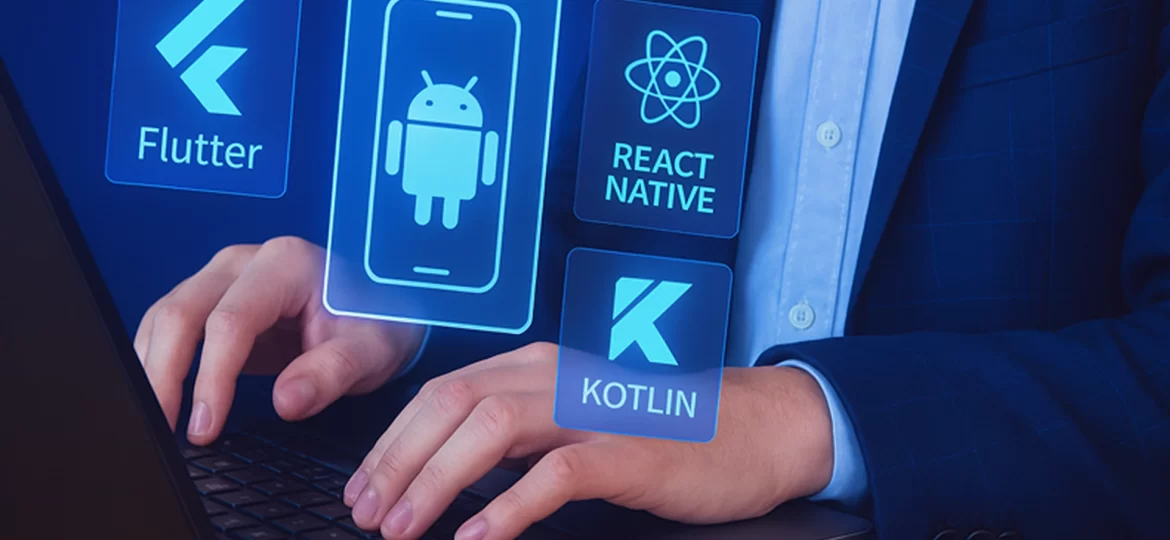
- Flutter – Google’s Cross-Platform Star
In flutter app development, one codebase runs beautifully on both Android and iOS. That means faster rollouts and lower costs without sacrificing performance. Apps that need a slick user interface or a lot of animations are favored by Flutter. Additionally, Google supports it, which means updates are ongoing and the ecosystem is expanding.
- React Native – Flexible and Reliable
Perfect for building apps quickly and keeping them easy to update. Businesses that want quick prototypes and steady updates love it. Plus, there is a vast pool of developers to choose from.
- Kotlin Multiplatform Mobile (KMM) – Near-Native Performance
For businesses that need high performance but still want cross-platform efficiency, KMM is a strong contender. It is great for apps that require deep integration with device features.
- Ionic with Capacitor – The Web Developer’s Friend
If your team already knows web technologies, Ionic can cut your learning curve dramatically. It is best for content-driven apps, PWAs, and businesses needing a fast, functional app.
- Jetpack Compose – Modern Android UI
If your focus is purely Android, Jetpack Compose offers a modern, declarative way to build UI. It’s fast, efficient, and perfect for Android-first brands.
Matching Frameworks to Business Goals
Choosing the “best” framework is not about popularity but fit. If speed to market is your priority, flutter app development or React Native could be the way to go. If you want the closest thing to native performance, KMM or Jetpack Compose makes sense.
This is where a lot of businesses get stuck. They see a big name, assume it is the right pick, and dive in — only to realize halfway through that it is not a match for their needs.
The truth is, in android app development, matching framework capabilities to business goals can save months of rework and serious money.
That is why we often start projects with a deep dive into the client’s goals before writing a single line of code. The result? No nasty surprises down the road.
Avoiding Common Framework Mistakes
Plenty of projects fail not because the idea was bad, but because the wrong framework was chosen. Sometimes the problem is overestimating what a framework can handle. Other times, it is picking a tech that is hard to find developers for, slowing down maintenance and updates.
In 2025, another mistake is ignoring scalability. Your app might run fine now, but what happens when your user base triples? This is why we always plan for the “what’s next” from the start in flutter app development and other frameworks we work with.
Framework choice isn’t just a developer’s problem — it’s a business risk. Getting it right from day one gives you breathing room to focus on growth, not damage control.
How OTFCoder Private Limited Simplifies the Decision
We have seen businesses’ frustration when a framework holds them back. We combine technical expertise with real-world business sense. That means you get recommendations that make sense for your app’s goals, budget, and growth plans — not just what is trending on developer forums.
If android app development feels overwhelming, we make it simple. If you are considering flutter app development, we can help you understand how it stacks up against other options for your specific project. No pushy sales pitch. Just straight answers, clear timelines, and a plan that works.
Summing Up!
Choosing the right framework is the first big win in your android app development journey. It sets the tone for everything that follows — from how fast you launch to how smoothly your app runs a year from now. In 2025, the right choice can mean the difference between chasing and setting trends.
If you want clarity, we are here to talk it through with you. Drop us a message, share your idea, and we will figure out if flutter app development, React Native, or another option fits your vision.
Because the best time to make the right tech choice is before you start — and the second-best time is now.