You launch the app with a few features, clean navigation and a clear user journey. Then updates begin.
More APIs. More screens. Real time updates. Multiple user roles.
Suddenly, managing data feels harder than building the UI itself.
This is where Flutter state management becomes a strategic decision, not just a technical one. In 2026, scalable architecture determines how fast you can release features, fix bugs and expand globally. Choosing from the best Flutter state management libraries early can save months of refactoring later.
Let us walk through what this looks like in real projects and how to approach it the right way.
What Flutter State Challenges Look Like in Real Projects
In the early stages of development, most Flutter apps rely on simple state handling. A few setState calls, passing data between widgets, and everything works smoothly. At that stage, complexity feels manageable.
The challenge appears when growth kicks in. User authentication must persist across sessions. API calls become asynchronous and layered. Different screens depend on shared data. Notifications and background updates start influencing visible UI. What once felt simple now feels unpredictable.
We have seen this pattern repeatedly while working as a Flutter app development company. Teams often postpone structured architecture because the app is still small. Months later, they struggle with inconsistent UI updates, tightly coupled business logic, and code that is difficult to test.
Without clear Flutter state management solutions, small architectural shortcuts slowly turn into bottlenecks. Debugging consumes more time. Onboarding new developers becomes slower. Feature releases stretch beyond timelines.
The natural question then becomes, why is this even more critical in 2026?
Why Flutter State Management are Important
Flutter is no longer just a mobile framework. According to official Flutter documentation, one codebase now supports Android, iOS, Web, Windows, macOS and Linux. That six-platform capability changes the scale of modern products.
Google has also shared that Flutter crossed over one million developers worldwide within a few years of its launch. The Stack Overflow Developer Survey 2023 continues to rank Flutter among the most loved cross-platform frameworks. Adoption at this level means production-grade apps are becoming more complex and more ambitious.
In 2026, businesses expect more from their apps. Real-time updates are standard. AI-powered recommendations adjust the UI dynamically. Global users interact from multiple devices at once. When state handling is not structured, these requirements expose weaknesses quickly.
Structured Flutter state management ensures predictable UI behaviour, clearer separation of concerns and easier testing. It supports scalability without sacrificing performance. For any serious Flutter app development company, this is part of growth planning, not an optional enhancement.
So which libraries help achieve that balance?
Best Flutter State Management Libraries in 2026
The right solution depends on your app’s complexity, team size and long term goals. There is no single universal winner. Instead, each library serves a specific purpose within modern app architecture.
Provider
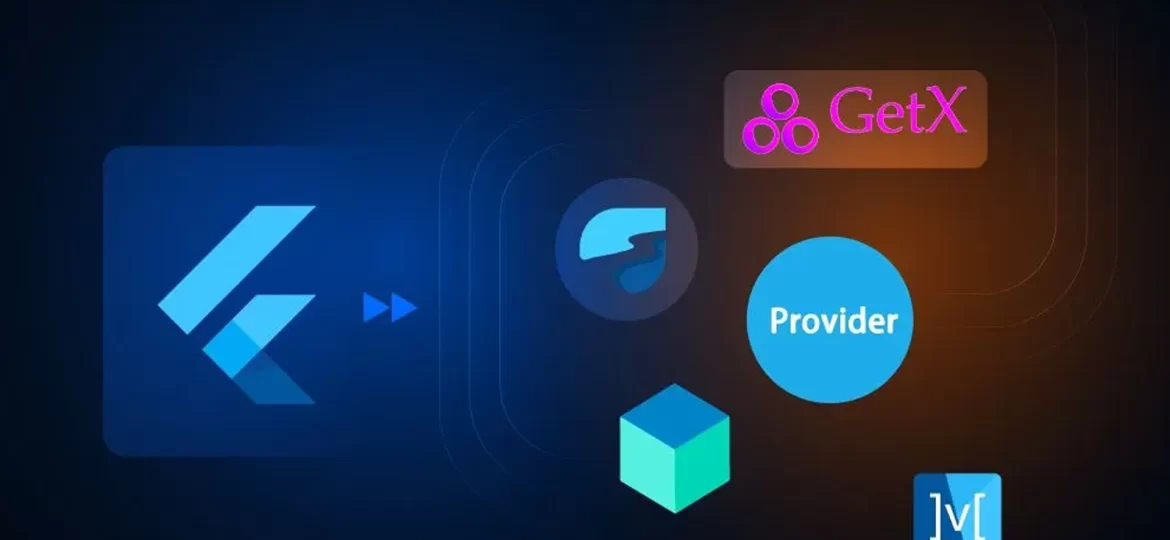
Provider continues to be one of the most accessible options. It simplifies dependency injection and shared state management without overwhelming developers. For small to mid-sized apps, Provider strikes a healthy balance between structure and simplicity. It allows teams to centralise state while keeping code readable. Many startups begin here because the learning curve is manageable and integration is straightforward. Among the best Flutter state management libraries, Provider remains a practical starting point for structured growth.
Riverpod
As applications scale further, Riverpod often becomes the preferred upgrade. Built with improved safety and flexibility, Riverpod removes reliance on BuildContext and enhances testability. This becomes important in larger systems where multiple asynchronous operations must work together seamlessly. Fintech platforms, SaaS dashboards and enterprise apps often benefit from Riverpod because it supports clean architectural layering. In 2026, Riverpod is widely considered one of the most reliable Flutter state management solutions for long term scalability.
Bloc
For teams that value strict separation between presentation and business logic, Bloc remains a powerful choice. Bloc introduces an event-driven approach where UI responds predictably to state changes. The clarity it brings to complex workflows makes it especially attractive for enterprise-grade applications. Its strong community support and significant GitHub adoption reflect its maturity. Many established teams working with a professional Flutter app development company choose Bloc when maintainability and testability are top priorities.
GetX
GetX takes a different approach. It focuses on speed and efficiency. By combining routing, dependency injection and state handling in a lightweight structure, it reduces boilerplate and accelerates development cycles. This makes it suitable for startups building MVPs or teams that need rapid iteration. However, it requires disciplined usage to prevent logic from becoming overly centralised. When used thoughtfully, it stands among the practical Flutter state management solutions for fast-moving projects.
MobX
MobX, on the other hand, shines in highly reactive interfaces. It relies on observable patterns that automatically update the UI when data changes. This model works particularly well in dashboards and data intensive applications where UI must respond instantly to evolving data streams. For projects with heavy real time updates, MobX remains one of the effective choices among the Best Flutter state management libraries.
The key takeaway is not to follow trends blindly. It is to align the library with your product roadmap.
Tips, Best Practices, and Mistakes to Avoid
Selecting a state management approach is only the first step. How you implement it determines long term success.
Start by matching complexity with product stage. Avoid overengineering a small app with enterprise level patterns. At the same time, do not underestimate future scale. Clear separation between UI, business logic, and data layers prevents unnecessary coupling later.
Documentation plays a critical role. When new developers join, they should understand why certain Flutter state management solutions were chosen. Testing state logic independently ensures reliability as features expand.
One common mistake is mixing multiple libraries without architectural clarity. Another is postponing structure until performance issues appear. Refactoring mid project can be costly and disruptive.
As an experienced Flutter app development company, we advise planning architecture around business goals first. Are you building for rapid experimentation or long term enterprise scale? The answer shapes your decision.
Strong architecture supports growth.
The right Flutter state management strategy ensures your app remains maintainable, testable, and scalable as it evolves. Provider offers simplicity for growing startups. Riverpod and Bloc support structured expansion. GetX accelerates MVP development. MobX excels in reactive systems.
There is no one-size-fits-all answer. What matters is making an informed choice aligned with your roadmap.
If you are planning to build or scale a cross platform product in 2026, partnering with a trusted Flutter app development company is a great idea so that your foundation is built for the future.
Ready to decode the right state management approach for your product? Connect with us for a technical consultation and let us help you scale with absolute clarity.
FAQs
What is Flutter state management?
It is the approach used to manage application data and ensure consistent UI updates across widgets.
Which is the best Flutter state management library in 2026?
Riverpod and Bloc are widely preferred for scalable systems, while Provider works well for moderate complexity apps.
Why is state management important in cross-platform apps?
It ensures consistent behaviour across devices and supports structured growth.
Can state management impact app performance?
Yes. Poor architecture can cause unnecessary UI rebuilds and slow updates.
Do small apps need advanced state management?
Not always. However, planning early prevents expensive refactoring later.